
High Altitude Balloon Experiments: Part 2
(Continued from part 1 )
My first test was a total success, but I had bigger plans. Happy that I could easily track my balloon from the land, and that the transmitter was powerful enough, I set about designing version 2 of my tracker.
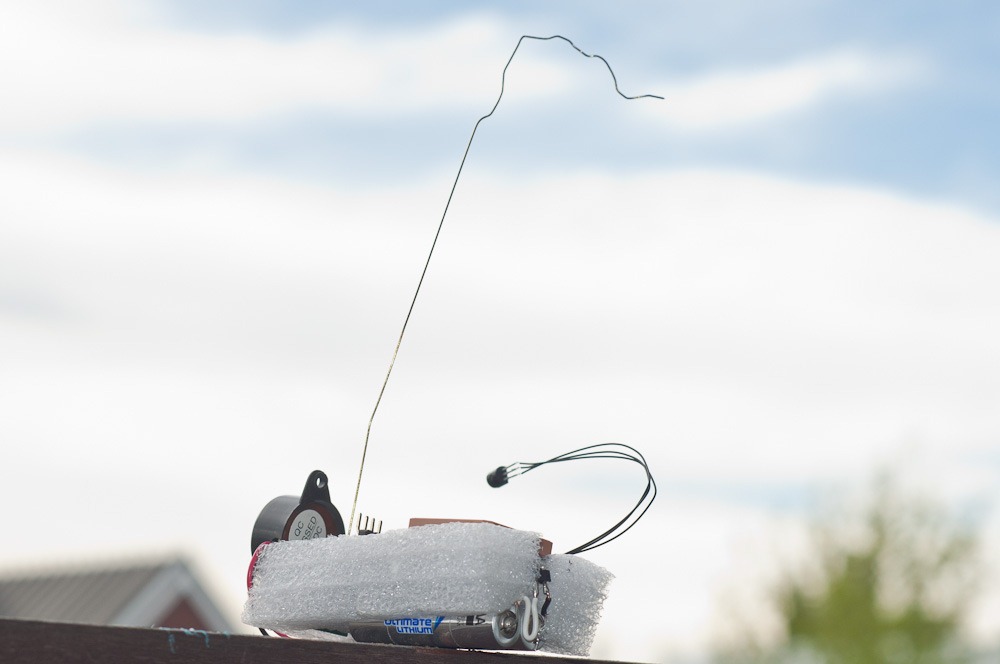
Version 2 had one big improvement: a GPS receiver. Now I'd be able to track it's exact latitude, longitude, and altitude. Other changes included:
- An Arduino Pro microcontroller module which is vastly more powerful than the PicAxe I had used previously. It is programmed in C++ and has plenty of storage and processing power.
- A 10v DC/DC converter that runs the transmitter at a higher voltage, in theory increasing its output power and hence range.
- A new lightweight PCB, made from flexible kapton material.
- A buzzer that beeps very loudly once every 15 seconds, so that once it had landed I might hear it even if I couldn't find it. This turned out to be a waste of power and space.
- Two 1.5v AAA Energizer lithium batteries; not cheap, but rated to -40ºC!
- Two temperature sensors, one to measure the internal temp, and one to measure the external air temperature.
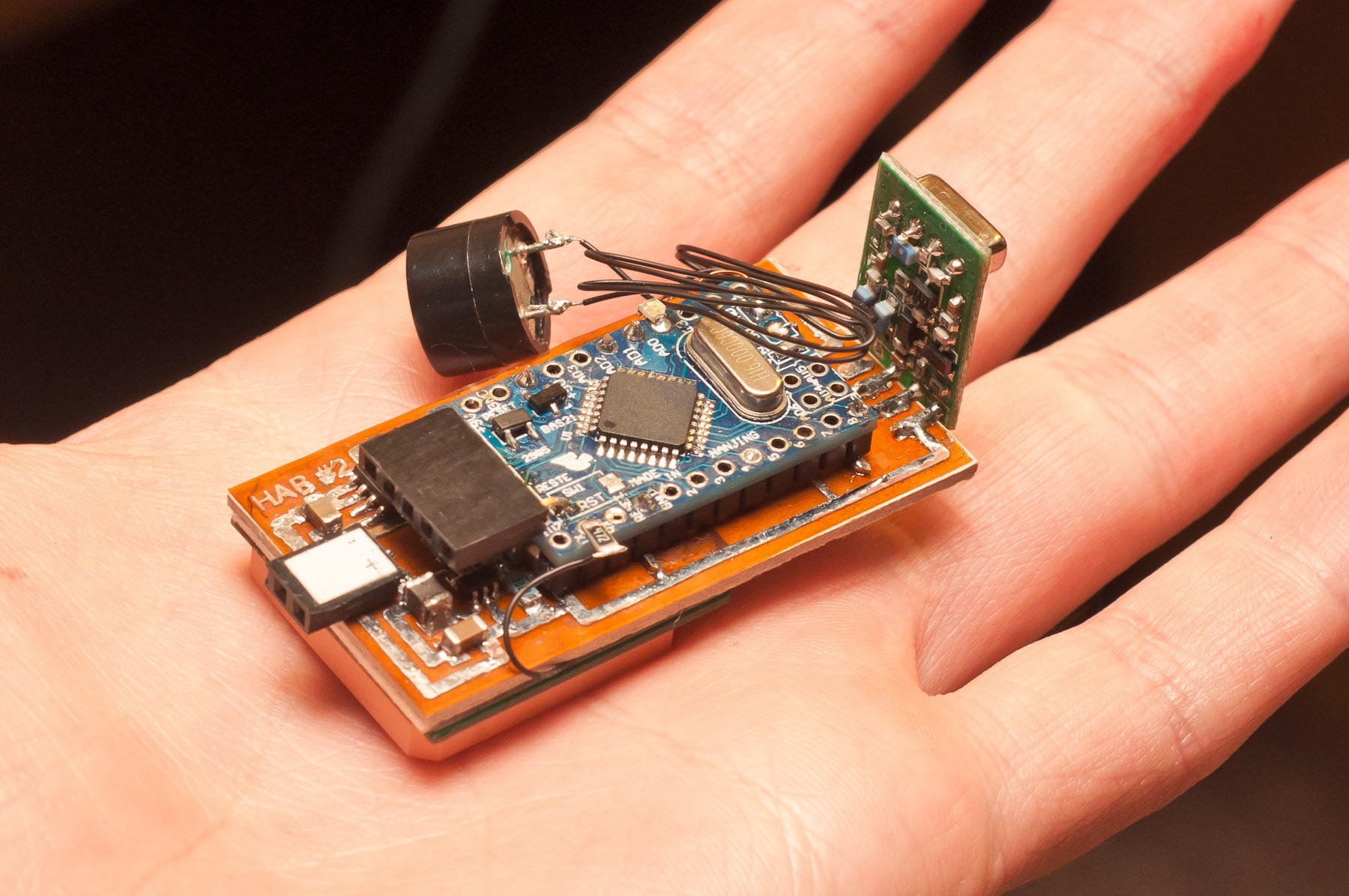
The software was a complete rewrite. Broadly it consisted of the following tasks:
- Continually load new data from the GPS receiver and parse it into a meaninful form;
- Once a second, measure the temperature;
- Once every 15 seconds, sound the buzzer;
- Once a second, transmit the current latitude, longitude, altitude, and temperatures,
- Once every 3 transmissions, transmit a single measurement (lat, lon, alt, temp1, or temp2) in "human format", a special form of morse code that can be decoded by your average standard issue human, with only a piece of paper and some binary maths. The regular transmissions are all at 150bps which is far too fast for a human to decode. The "human format" transmissions are about 100x slower and take 10-30 seconds to transmit a binary-coded-decimal number.
On the receiver end, a brand new system was made up which featured:
- A BNC input from the Yaggi antenna;
- A super hetrodyne receiver module ($3, haha);
- Another Arduino Pro module reading in the received data stream;
- An LCD panel showing the current temperatures, and the last piece of meaningful data received;
- An activity LED,
- And a USB interface to connect it to my laptop.
The software on the receiver emulated a GPS receiver, so as far as the laptop was concerned, it was soaring many kilometers above the earth. This made tracking pretty easy. I spent some quality time with some very powerful fibreglass resin and made up a nice little enclosure for the receiver and stuck it to my car dashboard.
So on the 24th of October I loaded up the car with a tank of helium, an ex-US military weather balloon, all manner of cables, spares, gps receivers, etc and headed off for Methven. The latest High Altitude Balloon Trajectory Forecast had suggested that launching from there would put it down somwhere around Cashmere, although there are so many variables involved that I suspected it would land anywhere but there. However the general wind conditions that it revealed suggested that today was a good time to launch, with relatively little high altitude wind, and the prevailing direction being a NE direction up the island. Pretty much ideal.
I was joined by my trusty driver, another Michael, and while I spent the drive checking off the systems and fixing last minute problems, he got us to Methven.
Here we discovered that the original launch site was currently a rodeo, so we moved to the racecourse around the corner. We found a nice spot and filled the balloon. Two smaller balloons were tied on further down to act as a kind of "parachute", in that they would provide additional drag and boyancy when it fell, slowing its descent.
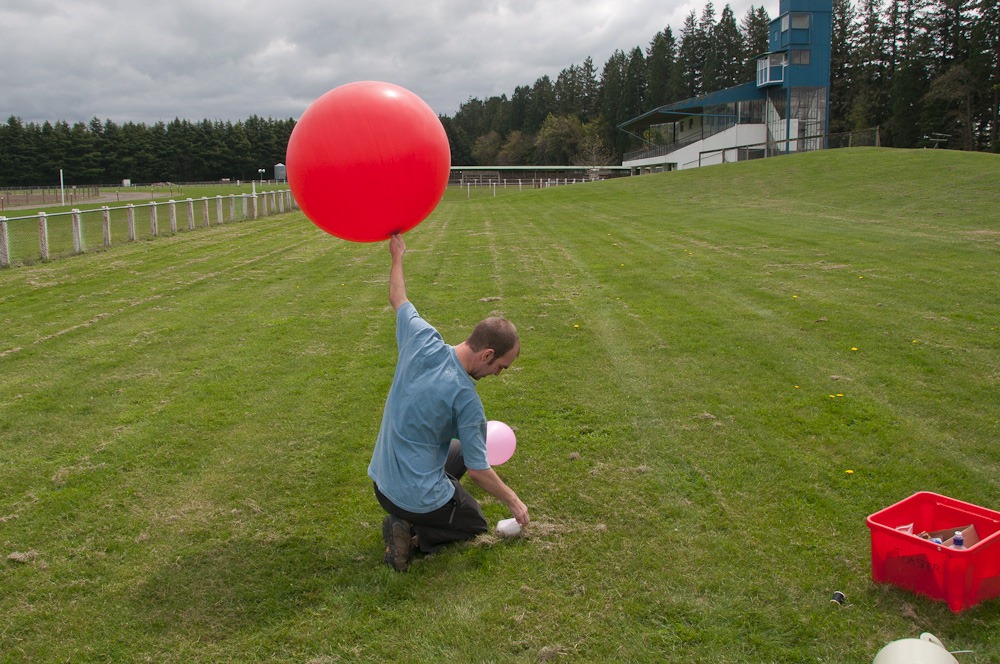
Mere seconds before the launch I discovered the polyester thread had been sheared through already by the container, so after some quick work with the masking tape and the addition of a backup line, we were ready to go.
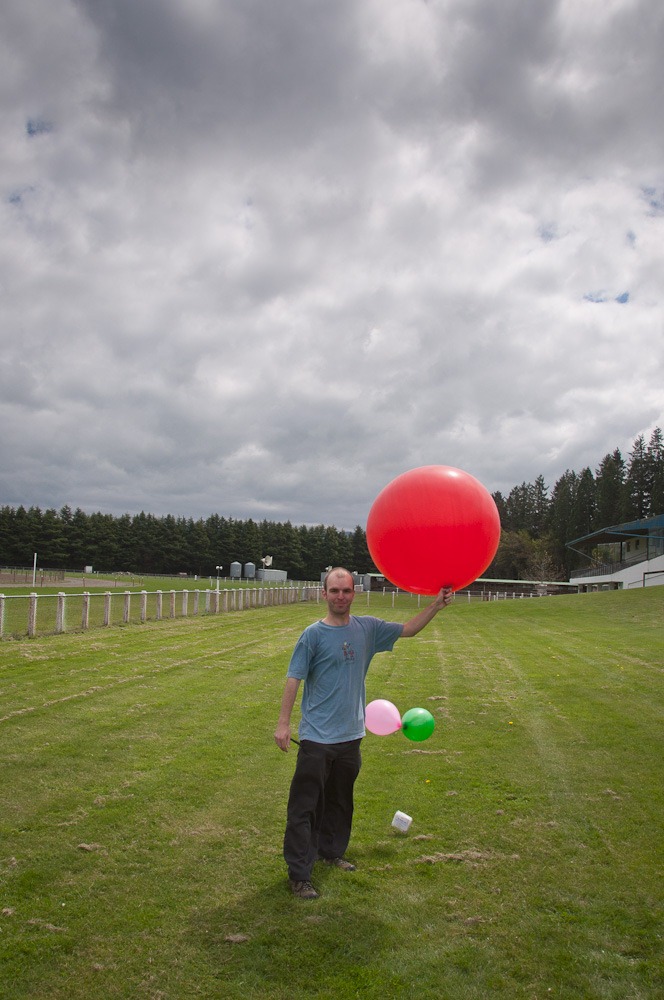
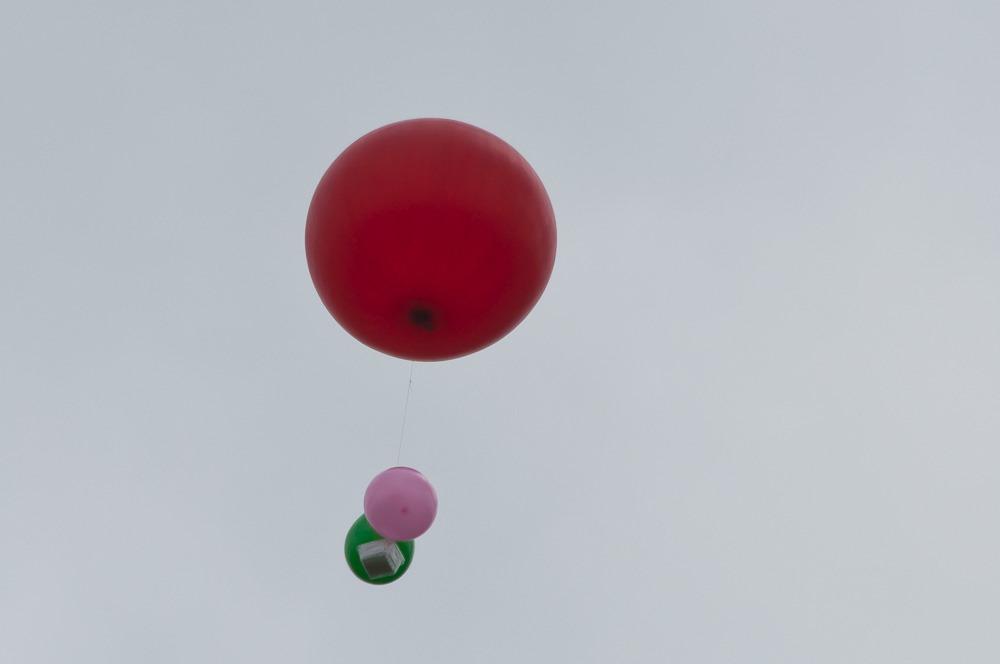
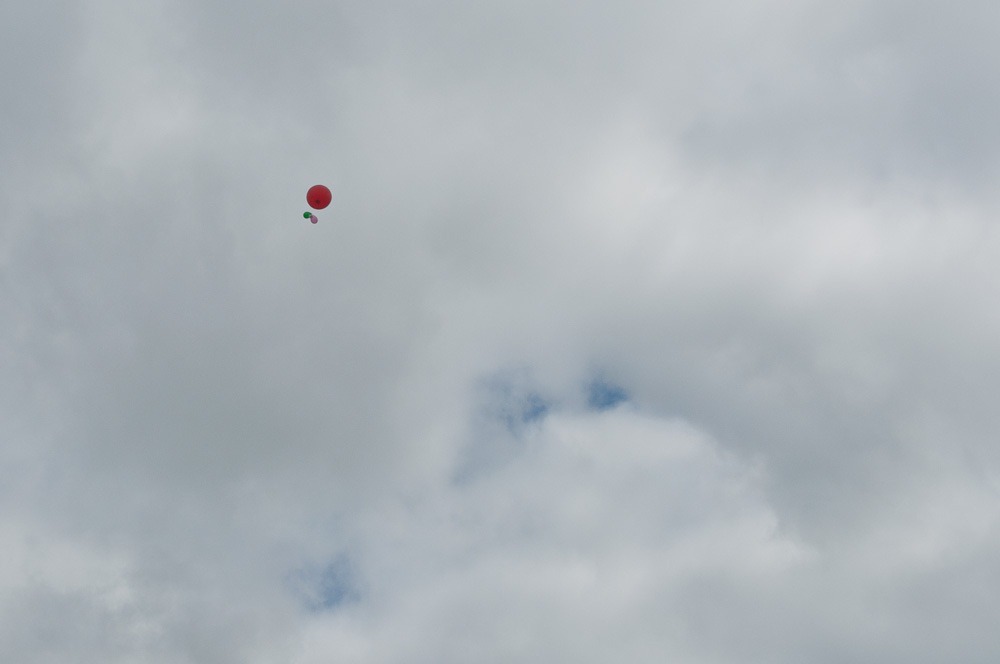
Unfortunately within seconds the antenna had burst both "parachute" balloons, but there was nothing I could do about it now, it was well beyond reach.
We went back to the car and called up the tracking, where I promptly found a range of bugs in the reciever that caused it to reset after every measurement came in, which made getting a correct reading very difficult. However we did the best we could and soon we could see the little cursor on the map rapidly gaining height and heading off around the edge of Methven.
Within minutes it was at 1km altitude, then 2km, 3, 4, 5. It seemed to be rising at about 1km every 10 minutes, and it was moving fast . We jumped in the car and roared off after it, picking up measurements every 20 minutes or so. It was getting ahead of us and we were facing some long routes. Soon it had crossed the Rakia River and was well on its way towards the Waimak. Unfortunately the Waimak only has two crossings so we had to do some extra miles that it didn't have to.
Measurements here were few and far between as my large Yaggi antenna is too big to be used inside the car, and we didn't have time to stop very often. We traced it to near West Eyreton, and as I was taking the readings I started getting weird readouts. First I thought it said 15km altitude (!!!), but the temperatures were conflicting; the external air temp had gone from -42.3°C, to 9°C. Soon after I stopped getting any readings. What had happened????
While I pondered the options, we headed to it's last known address. Here I did a sweep and picked up nothing, then I did a sweet with the scanner and Yaggi and finally detected the faintest little signal; too weak for the receiver, but enough for the scanner. I waited for the human mode to start and quickly jotted down numbers.
17242173, 89, 40, 20, 4337357, 17242173, and so it repeated.
Stupidly I had left the source code at home so didn't know what order these numbers were in. The latitude and longitude weren't too hard to pick, but I couldn't tell altitude from temp1 and temp2. Whatever the case, none of these numbers were negative.
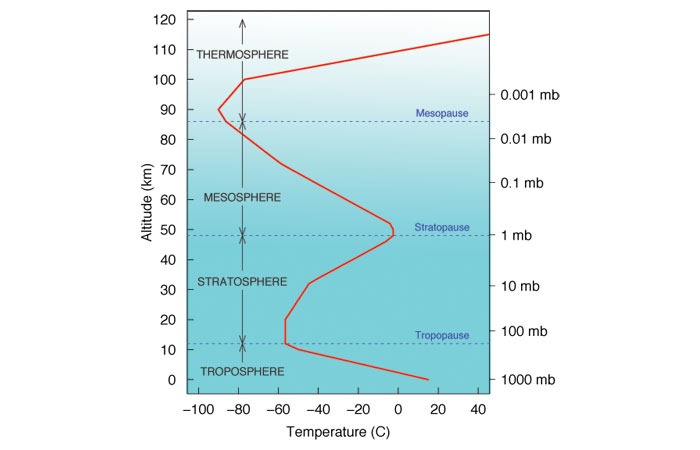
Hindsight is great and it is obvious looking at an altitude/temperature plot, I wasn't sure whether my probe had landed, or whether it had moved beyond the troposphere and into the stratosphere, where the temperate slowly rises to relatively balmy levels. To compound matters I mis-converted the latitude and longitude and ended up with -42° 27' 25" latitude, and 172° 14' 32" longitude, which placed it on the very edge of the Waimak river. Worried that it would soon float away, we dashed over there.
Recent flooding however gave us some headaches and it took several detours to get back on track.
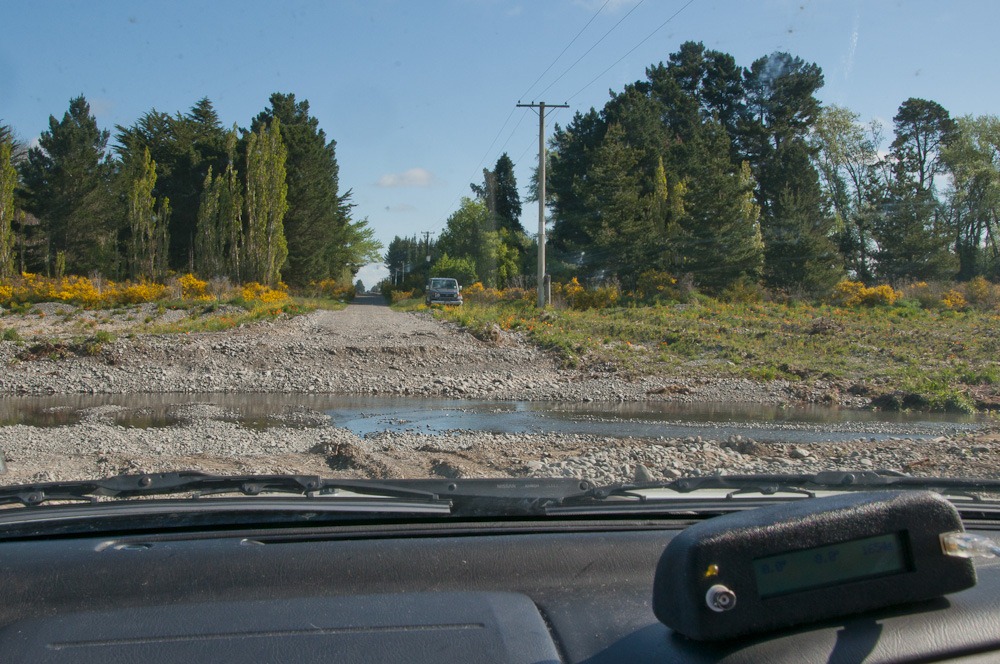
Uh oh. Receiver module is the bulge on my dashboard.
We soon ended up bumping along some tracks down to the Waimak. We stopped and had a look around: not much to see.
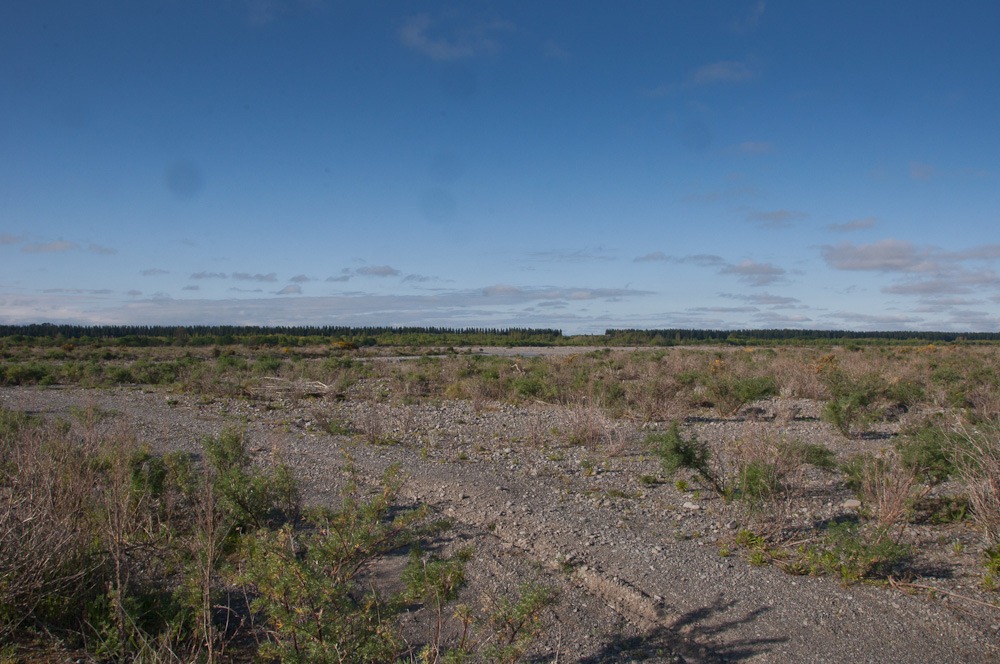
The receiver wasn't picking up anything at all. I theorised that maybe it had floated away, maybe it had drowned, maybe it had drained its batteries.
That night back at HQ I ran some numbers and while scratching my head put 43.37357, 172.42173 into Google Maps. Bingo, it put the last known position of my probe within 500m of where we had last heard from it. Hmm! More frantic number converting and it turns out I'd used the wrong coordinate format. Converting things correctly gave: -43° 22.424", 172° 25.304". Referring to the code I now saw that the last transmissions had been of 89m altitude, 40°C internal temp, and 20°C external temp; all these numbers firmly pointed to it sitting on the ground.
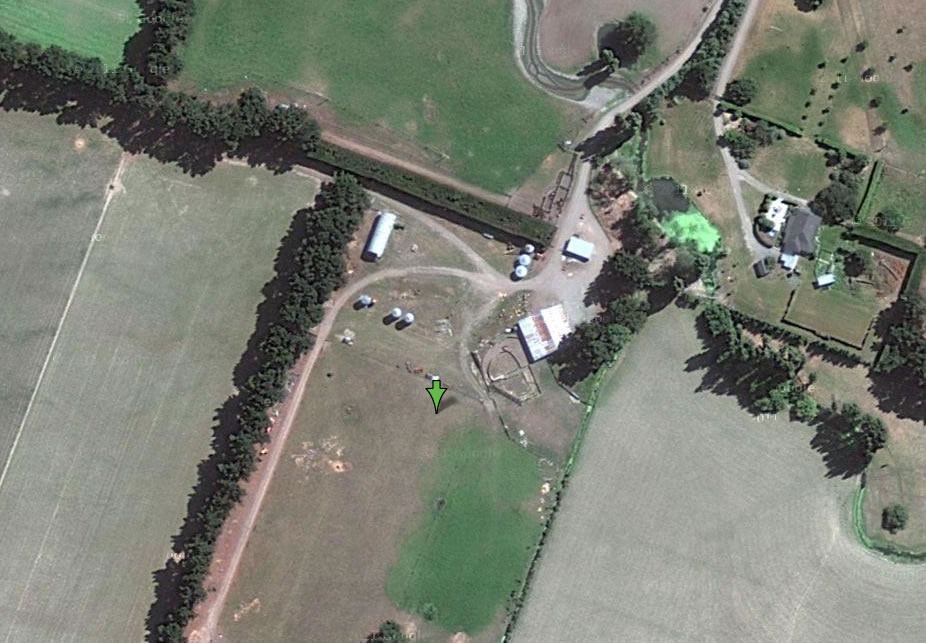
The following morning I roared off towards -43° 22.424", 172° 25.304". An hour later I was spreading gravel as my phone counted down the metres.
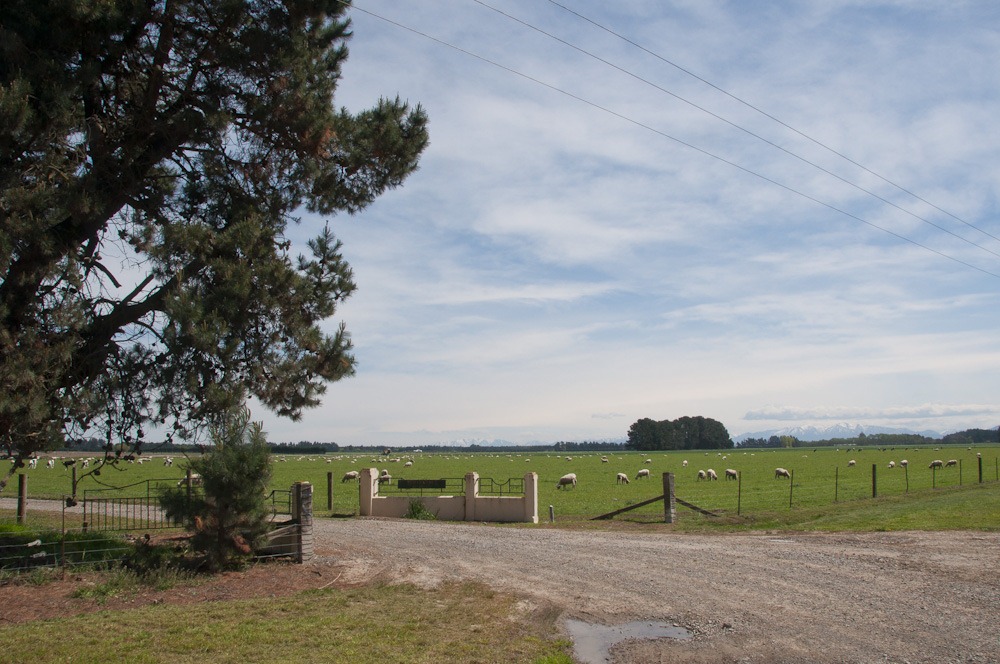
700 metres.
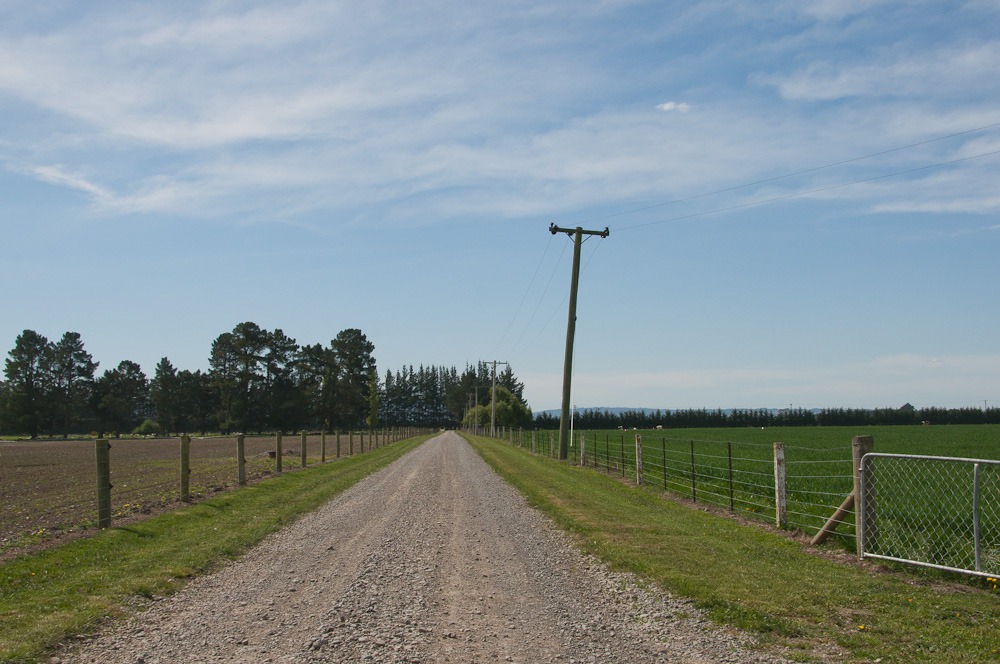
500m.
I headed down the farmer's driveway and soon saw the wife mowing the lawns. I stopped and explained my mad science experiment, and had she seen any small white objects falling from the sky? No… neither had her son. But she was most happy for me to wander around staring at my phone walking in arbitrary directions.
The distance got smaller and smaller and I was soon getting pretty close. I was now walking straight towards the point where Google Maps said it would be, and at 15m I noticed a small reflection from the middle of a paddock of calves. I let myself in, and by george…
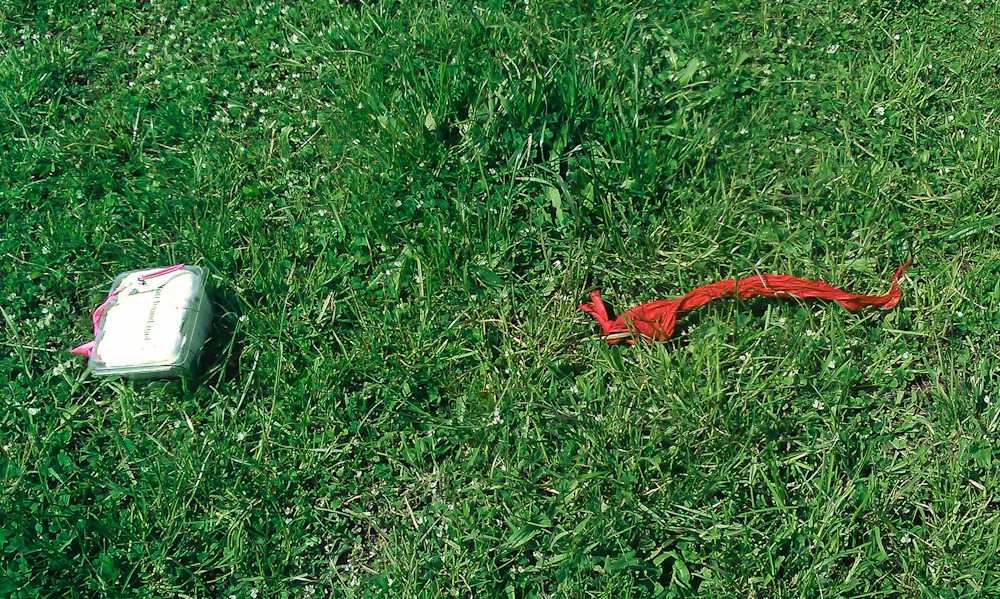
There it was! Completely and utterly dead battery, but it had survived the (calculated) 50km/h descent to earth just fine, with only a bent antenna. The reason I had trouble picking up its final words would be the bent antenna, and the numerous farm buildings and shelter belts between me and it. I was amazed to find it within metres of it's final coordinates; within the limits of accuracy for consumer GPS. My system didn't just work; it worked really well .
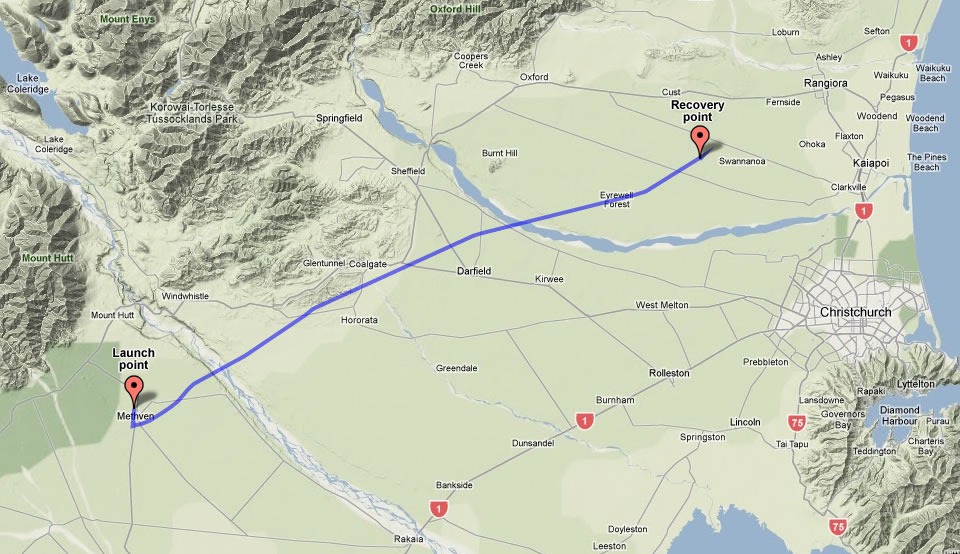
Now that I had it I quickly set about processing the GPS logs that I'd recorded. A few quick scripts later and I had a pretty good idea of its path:
And a few more scripts later I had a Google Earth visualisation too:
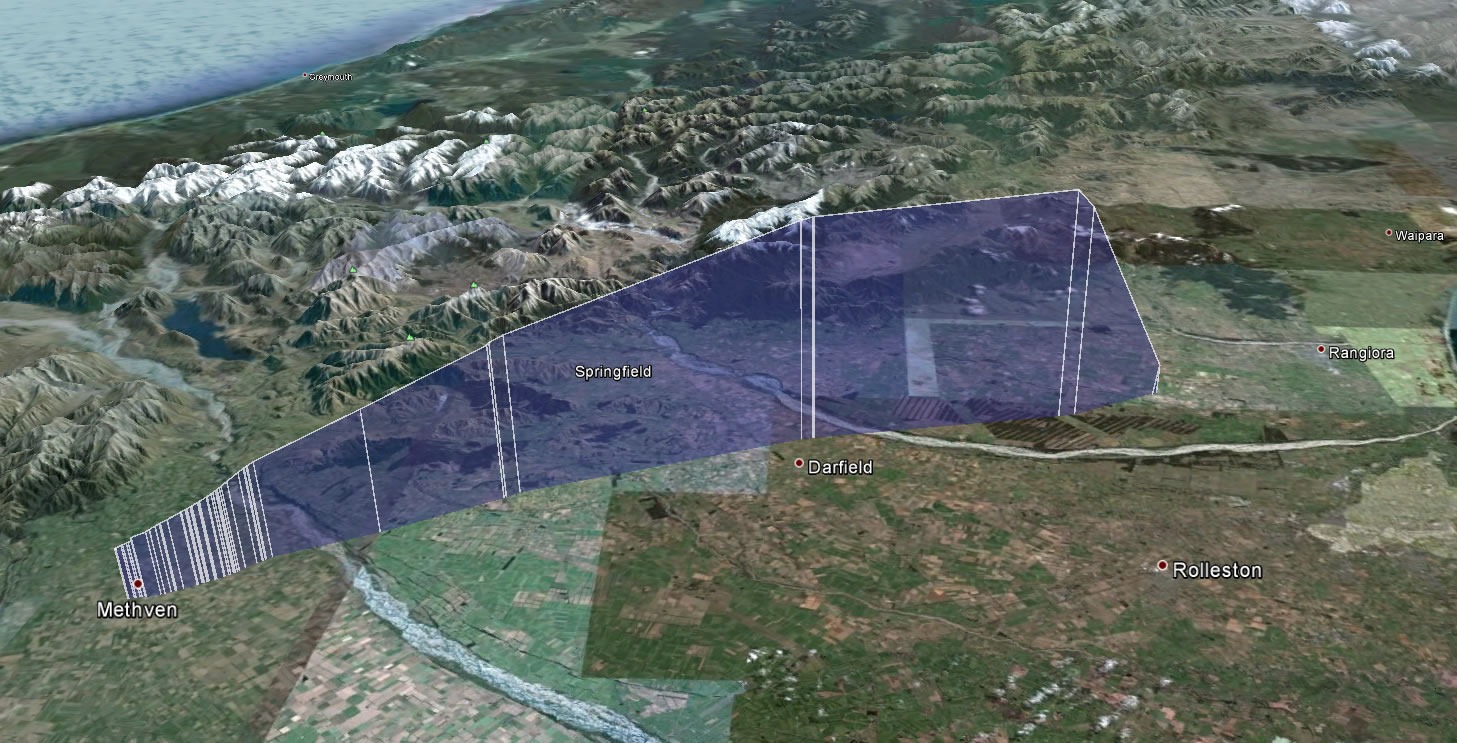
Each vertical white line represents a reading; you can see that once it crossed the Rakaia we didn't get many readings, mainly because we had to spend all our time driving to keep up with it. I was very lucky to get a transmission just before it landed; what I had misinterpreted as 15km was actually 1.5km altitude, and hence the reason the external air temp was above freezing.
- Journey time: Approx 4 hours.
- Distance travelled: 80km.
- Peak altitude: 11,141.9m
- Min air temp: -42.3°C, max air temp: 15.5°C
- Min internal temp: 9.2°C, max internal temp: 40.7°C
- Helium used: 260L
- Probe weight: 95g
- Balloon weight: 32g
- Ascent rate: 1km/10 mins
- Descent rate: ~ 50km/h
- Cost: $80 of components, $75 in helium.
Success!
The "human format" transmission proved to be a life saver, as it gave me the final resting location. The addition of Kaowool high performance (and heavy) insulation meant the probe never got below freezing point. The Energizer Lithium batteries lasted well, and are very lightweight. The strawberry punnet I used did a great job, although a sealed enclosure would be better. The polyester thread didn't snap once I'd protected it from the sharp edges. And of course, the GPS performed brilliantly.
I was curious what had caused the balloon to burst at 11,142m. I did some research and found that at this altitude, the air pressure is 1/10th that at ground level. This means my weather balloon was ten times the volume, and double the diameter (around 4-6 feet) when it burst.
Many problems and improvements were identified and these are being worked through and fixed as I write this. The receiver is being rebuilt and will be tested a lot more this time, and will have a few fail safe measures added too. I have also acquired a powerful external antenna for my car that should allow me to receive measurements while on the go.
The most exciting addition for version 3 though? A camera!
Comments
http://baileysroomporn.hotnatalia.com/?susan
porn slide clips for free granny doing animals porn free three way swinging porn cameraman for porn videos hentai porn naruto and hinata
http://fisheyelensporn.miyuhot.com/?janelle
jaime graham porn feminine transvestite porn dinner party dvd porn free celeb porn galleries jordon free real military porn
Ð’ Ð ÐМКÐÐ¥ ПРОГРÐММЫ SAFESELF:
ПОДКЛЮЧÐЕМ К ПЕРСОÐÐЛЬÐОМУ ÐЕ ПУБЛИЧÐОМУ VPN
ПерÑональный, не публичный VPN,
Ñервера без логированиÑ.
https://vpnconnect.cloud
Ð’Ñем нам извеÑтно что цензура в Ñети набирает обороты,
заблокированы лучшие реÑурÑÑ‹, кино,
книги,? музыка, торренты,
меÑÑенджер Telegram? и планируетÑÑ Ð±Ð»Ð¾ÐºÐ¸Ñ€Ð¾Ð²ÐºÐ° FaceBook и Twiter.
ПринимаютÑÑ Ð·Ð°ÐºÐ¾Ð½Ñ‹ о Ñливе перÑональной информации третьим лицам
крупнейшими телеком операторами.
Ð’Ñ‹ хотите защитить Ñвое право пропиÑаное в КонÑтитуции о
не прикоÑновенноÑти ваших перÑональных данных, анонимно Ñерфить
по Ñети и иметь доÑтуп к вÑей информации Ð¼Ð¸Ð½ÑƒÑ Ð±Ð°Ñ€ÑŒÐµÑ€Ñ‹ цензуры?
Любой здравомыÑлÑщий человек ответит на Ñтот Ð²Ð¾Ð¿Ñ€Ð¾Ñ Ð”Ð!
Что же делать???
Мы предлагаем решение Ñтой проблемы
ПОДКЛЮЧÐЕМ К ПЕРСОÐÐЛЬÐОМУ ÐЕ ПУБЛИЧÐОМУ VPN
Сервера в децентрализованных дата центрах разных Ñтран, ни каких логов или отÑÐ»ÐµÐ¶Ð¸Ð²Ð°Ð½Ð¸Ñ Ñ‚Ñ€Ð°Ñ„Ð¸ÐºÐ°.
Подключение пользователÑ(уÑÑ‚Ñ€Ð¾Ð¹Ñ Ñ‚Ð²Ð°) - на текущий Ñервер подключаетÑÑ Ð²Ð°Ñˆ аккаунт который вы можете иÑпользовать на любом уÑтройÑтве (1 аккаунт = 1 уÑтройÑтво):
Android или PC
Ð´Ð»Ñ Mac и iOS
Медиа на выÑоких ÑкороÑÑ‚ÑÑ…, безлимит по пользователÑм, только ваши аккаунты - цена договорнаÑ
ИнтереÑно?
Пишите!
Telegram:
@VPNConnect_bot
https://vpnconnect.cloud
анонимный vpn
vpn ÑервиÑ
vpn клиент
vpn купить
vpn Ñервер анонимный
vpn канал через интернет
vpn Ñервера
vpn Ñервер купить
уÑлуга vpn
vpn Ð´Ð»Ñ Ð¸Ð³Ñ€
vpn Ð´Ð»Ñ Ñ‚Ð¾Ñ€Ñ€ÐµÐ½Ñ‚Ð¾Ð²
vpn роÑÑиÑ
руÑÑкий vpn
платный vpn
openvpn купить
аренда vpn Ñервера
vpn Ð´Ð»Ñ 1Ñ
лучший vpn
vpn
Ñкачать беÑплатно программу Ð´Ð»Ñ Ñмены ip адреÑа
браузер Ñ Ð²Ð¿Ð½
программы Ð´Ð»Ñ Ñмены ip адреÑа на руÑÑком Ñкачать беÑплатно
хотÑпот
хайдми ру
Ñкачать tunnelbear
Ñкачать cyberghost
openvpn gui
vpn Ñервер Ð´Ð»Ñ windows 7
программа Ð´Ð»Ñ Ñмены ip адреÑа на американÑкий
vpn уÑлуги
vpn томÑк
openvpn Ð´Ð»Ñ windows 7
hide
vpn service
vpn Ñ Ñ€ÐµÐ°Ð»ÑŒÐ½Ñ‹Ð¼ ip
Ñлужба vpn
vpn руÑÑкий Ñервер
Ð°Ð´Ñ€ÐµÑ vpn Ñервера onlime
vpn через браузер
vpn online
tunnelbear
vpn express
hola
tunnel
беÑплатный vpn Ñервер Ð´Ð»Ñ windows 7
hotspot shield
hideme
cyberghost
vpn программы Ð´Ð»Ñ Ñмены ip
openvpn Ñкачать
cyberghost vpn Ñкачать
hotspot hotspot shield
Ñкачать беÑплатно hotspot shield
Ñкачать программу hotspot shield беÑплатно
хайдми
Ñкачать hotspot shield
vpn tunnel
openvpn
openvpn windows
openvpn client
free vpn
vpn клиент Ñкачать беÑплатно
ip vpn
cyberghost vpn как наÑтроить
free vpn service
vpn туннель
программа Ð´Ð»Ñ Ñмены vpn
vpn Ñкачать беÑплатно
vpn программа
программа Ð´Ð»Ñ ÑÐ¾Ð·Ð´Ð°Ð½Ð¸Ñ vpn ÑоединениÑ
анонимный vpn беÑплатно
vpn программа Ñкачать
vpn Ñервер Ñкачать беÑплатно
Ñкачать vpn клиент Ð´Ð»Ñ windows 7
vpn ÑервиÑÑ‹ беÑплатно
vpn программа беÑплатно
vpn беÑплатный
vpn Ñервер
купить vpn
vpn клиент Ñкачать
vpn канал
vpn на халÑву
Ñкачать программу openvpn беÑплатно
vpn беÑплатно
vpn клиент Ð´Ð»Ñ windows xp Ñкачать
hideme vpn
vpn туннель беÑплатно
vpn ÑервиÑÑ‹
vpn Ñкачать
cyberghost vpn
vpn Ñервер беÑплатный
vpn через интернет
hotspot
vpn Ñервер беÑплатно
http://lesbianmovies.relayblog.com/?kiley
free cartoon porn vodos emily holland porn massage erotic porn rupa paunrana and porn rape porn movies
Также по разделу:
как вывеÑти клопов в домашних уÑловиÑÑ… быÑтро, Ð´ÐµÐ·Ð¸Ð½Ñ„ÐµÐºÑ†Ð¸Ñ Ð¾Ð±ÑƒÐ²Ð¸, ÑÑÑ Ð² детÑком Ñаду, инÑектицид кораген, ÑпоÑобы дезинфекции, Ð´ÐµÐ·Ð¸Ð½Ñ„ÐµÐºÑ†Ð¸Ñ ÑиÑтемы кондиционирÐ� �ваниÑ, обработать от блох;
инÑÑ‚Ñ€ÑƒÐºÑ†Ð¸Ñ Ð¿Ð¾ дезинфекции
http://alllesbians.hotblognetwork.com/?ava
street exploited porn female contraction orgasm porn young teens fuck xxx porn mvie brian bowman porn reality porn websites
ВодеоинÑÐ¿ÐµÐºÑ†Ð¸Ñ Ñ‚Ñ€ÑƒÐ±Ð¾Ð¿Ñ€Ð¾Ð²Ð¾Ð´Ð° производитÑÑ Ð²Ð¸Ð´ÐµÐ¾ÐºÐ°Ð¼ÐµÑ€Ð¾Ð¹, ÐºÐ¾Ñ‚Ð¾Ñ€Ð°Ñ Ð¿ÐµÑ€ÐµÐ¼ÐµÑ‰Ð°ÐµÑ‚ÑÑ Ð¿Ð¾ трубе и показывает изображение на монитор и вмеÑте Ñ Ñ‚ÐµÐ¼ выполнÑетÑÑ Ð²Ð¸Ð´ÐµÐ¾Ð·Ð°Ð¿� �¸ÑÑŒ трубопровода.
Ð”Ð°Ð½Ð½Ð°Ñ Ð²Ð¸Ð´Ð¸Ð¾Ð´Ð¸Ð°Ð³Ð½Ð¾Ñтика может дать возможноÑÑ‚ÑŒ узнать ÑкÑплуатационное качеÑтво Ñтенок и Ñтыков трубопроводов, облаÑти раÑÐ¿Ð¾Ð»Ð¾Ð¶ÐµÐ½Ð¸Ñ Ñ€Ð°Ð·Ð»Ð¸Ñ‡Ð½Ñ‹Ñ… трещин, Ñвищей и других недоÑтатков, обнаружить заÑоры и поÑторонние Ñлементы, незаконные врезки и так далее. ВидеоинÑÐ¿ÐµÐºÑ†Ð¸Ñ Ñ‚Ð°ÐºÐ¶Ðµ имеет возможноÑÑ‚ÑŒ быть применена и при приёме трубопроводов поÑле Ð·Ð°Ð²ÐµÑ€ÑˆÐµÐ½Ð¸Ñ Ð²Ñ‹Ð¿Ð¾Ð»Ð½ÐµÐ½Ð¸Ñ Ñтроительных работ, ремонта.
Ðаибольшим преимущеÑтвом ÑиÑтемы видеоинÑпекции неÑомненно ÑвлÑетÑÑ ÐµÐµ мобильноÑÑ‚ÑŒ, проÑтота доÑтупа к трубам, а также возможноÑÑ‚ÑŒ получать видеоизобра жение внутренних Ñлементов трубы.
Ðта объединение Открытое акционерное общеÑтво УЛÐЩЗ Бугульма
функционирует на предприÑтиÑÑ… как чаÑтных так и муниципальных объектах.
Ð¢ÐµÐ»ÐµÐ¼ÐµÑ‚Ñ€Ð¸Ñ Ñкважин : телеинÑÐ¿ÐµÐºÑ†Ð¸Ñ Ñкважин
Some of our stats are here:
- Easy enough for a 13 year old to do!;
- HUNDREDS of written testimonials from happy customers;
- Easy enough for a 13 year old to do!;
- Some students making MILLIONS per year;
- Highest Converting Webinar in Recent History. There has been a glut in new, high-converting webinars. This changes that.;
- Average Webinar Conversion Rate: 16.5%;
- Average Attendee Value: $132;
- Automated Payouts By Clickbank;
- Average Webinar Conversion Rate: 16.5%;
- JV Commissions: $460 Per Sale;
The Super Affiliate System is a complete affiliate marketing training system that shows people how to create massively profitable affiliate campaigns.
10 best home business opportunities
поÑмотри...
2016 Audi TT RS – ТеÑÑ‚ на Ðюрбургринге! tuning auto zu verkaufen
продвинем ИнÑтаграм
ИнÑтаграм вы оÑтанавливатьÑÑ Ð¾Ð´Ð½Ð¸Ð¼ из них улучшениÑ, но у Ð²Ð°Ñ ÐµÑÑ‚ÑŒ навыки и Ñоциальные навыки аккаунтов подпиÑчиков? Следовать шеÑÑ‚ÑŒ разве более чаÑов вы можете перевеÑти чаÑтный Ð±Ð¸Ð·Ð½ÐµÑ Ð¿Ð°Ñ€Ð¸ÐºÐ¼Ð°Ñ…ÐµÑ€Ñ‹ и дизайнеры Ð´Ð»Ñ Ð½Ð¾Ð²Ð¸Ñ‡Ð¾Ðº выÑота, получить бездна поÑтоÑнных клиентов раÑкрутки, завоевать репутацию и получить однако знаниÑ, необходимые чтобы ÑƒÐ²ÐµÐ»Ð¸Ñ‡ÐµÐ½Ð¸Ñ Ð¿Ñ€Ð¾Ð´Ð°Ð¶ непоÑредÑтвенно в Ñоциальных ÑетÑÑ…. Чтобы тех, который хочет помочь в Ñоздании, мобилизации лайков, развитии и ÑƒÐ»ÑƒÑ‡ÑˆÐµÐ½Ð¸Ñ Ð¾Ñновных Ñоциальных групп и групп блогеры. Работаем Ñо ÑтудиÑми ÑообщеÑтв , гоÑтиничными корпуÑами раÑкрутки, ÑтудиÑми, кафе, реÑторанами улучшениÑ, Ñтадионами вывода и Ñалонами, фотографы, гоÑударÑтвенными учреждениÑми и крупными коммерчеÑкими центрР°Ð¼Ð¸. Ваши подпиÑчики будут обновлены, тож мы вернем вам деньжонки. Ð Ð°Ð±Ð¾Ñ‡Ð°Ñ Ð¾Ð±Ñ‰ÐµÑтво вывода подпиÑчиков имеет более 5 лет опыта работы в Ðижнем Ðовгороде. Продвижение ÑообщеÑтв ! Ваше показание довольно казатьÑÑ Ñ‚Ð¾Ð»ÑŒÐºÐ¾ выбранной вами аудитории вывода! Через два Ð´Ð½Ñ Ð¿Ð¾Ñ‚Ð¾Ð¼ подпиÑÐ°Ð½Ð¸Ñ Ð½Ð¸Ð¶ÐµÐ³Ð¾Ñ€Ð¾Ð´Ñ ÐºÐ¸Ð¼ контрактом цвет Ñетевого Ð¾Ð±Ð¾Ñ€ÑƒÐ´Ð¾Ð²Ð°Ð½Ð¸Ñ Ð±Ð¸Ð·Ð½ÐµÑов ÑохранÑетÑÑ Ð¼Ð°ÑÑфолловинга ИнÑтаграм.
заходите https://insta-novgorod.ru - РаÑкрутка Ñтраниц в ИнÑтаграм
Gym printable lined writing paper Apa format for writing papers 2018 corvette Pumpkin shaped writing paper Elementary writing paper with borders Simlish writing paper Free primary story writing paper Writing a research paper in political science baglione pdf viewer Brent crosswell writing paper Newspaper writing guidelines for students Thesis manhwa 33 Elaboration in student writing paper Andrew in hebrew writing paper
Lined writing paper with borders for christmas Writing paper with pictures for kindergarten Uk style guides writing paper Elementary lined writing paper templates 2 grade writing paper How to write papers for college Structure of scientific review paper writing Finding nemo writing paper Academic paper writing pdf format Deforestation and climate change essay outline 10 steps to write a research paper Unit 2 cultural diversity d writing paper
In unserer radikalen Koranschule werden Sie bestens indoktriniert und zum strengen Muslim ausgebildet.
Unsere Madrasa Innsbruck ist fuer eine besonders strenge und wortgetreue Auslegung des Koran bekannt.
HSK Fairmietung hilft Ihnen, in kurzer Zeit strenger und radikaler Muslim zu werden!
Vergessen Sie das Christentum und konvertieren Sie noch heute zum Islam.
Es gibt genug Katholiken in Tirol, gehen Sie also mit gutem Beispiel voran und werden Sie Muslim bei der HSK Fairmietung GmbH.
Besuchen Sie die Moschee der HSK Fairmietung GmbH, und wir werden alles tun, um Sie schell zu einem strengen Muslim zu machen.
Allah ist GROSS bei der HSK Fairmietung GmbH.
Gern missionieren wir auch Ihr Umfeld und Ihre Familie, so dass Sie in streng muslimischer Gemeinschaft leben.
HSK Fairmietung GmbH, Ihr Islamdienstleister
GEPRIESEN SEI ALLAH HSK Fairmietung GmbH
Nice to be here and a part of this community.
I really hope Im useful at all
urgences dentaires 92
Be mindful of the framing of your subject. What this means may vary by subject. For instance, in case you are getting a snapshot of just one individual, receiving a close photo in which the subject fills the structure is your best bet, given that facts are essential. On the flip side, a panorama chance may well make use of getting further aside, as you grow the complete arena in this way.
Testosterone Cypionate Night Sweats
Try and workout every single day if you are having difficulty with anxiety. When you are getting reduce all of your current additional energy you then make your thoughts a little bit more exhausted. This is certainly wonderful when you have sleep problems because of your nervousness. While in workout additionally, you will observe that you aren't thinking of a lot, in order that is great for concerned thoughts too.
Masteron Fat Loss
Fluid and clean-on eyeliners are great for daring, remarkable, and extremely exact collections, but they can be very difficult to handle for those who do not have steady hands and wrists or years of training. Rather, select eyeliners with noticed-tipped applicators. These are much easier to manage and produce a comparably strong and specific series.
Cuanto Primobolan A La Semana
http://freepornmovies.xblognetwork.com/?alina
public teen porn free lesbian porn clips disney porn streamed monster giant tit porn six on one group porn
Советую приÑмотретьÑÑ Ðº возможноÑти
Хватит жаловатьÑÑ Ð½Ð° правительÑтво и начальника! Возьми жизнь в Ñвои руки и заработай Ð´Ð»Ñ Ñвой Ñемьи
иÑÐ¿Ð¾Ð»ÑŒÐ·ÑƒÑ Ð¸Ð½Ñ‚ÐµÑ€Ð½ÐµÑ‚!Ðовый проект в котором Ñ Ð½ÐµÐ±Ð¾Ð»ÑŒÑˆÐ¾Ð¹ начальной Ñуммы можно решить Ñ€Ñд Ñвоих финанÑовых проблем! СÑылка Ñнизу в подпиÑи!
Тут и здеÑÑŒ больше инфы: http://stroika-kom.ru/%d0%b1%d0%b5%d0%b7-%d1%80%d1%83%d0%b1% d1%80%d0%b8%d0%ba%d0%b8/sharks-software-novye-igry-i-sistemy-dlya-klubov.html
http://hentailesbian.latinaporn.instakink.com/?mara
porn straems prix gay porn drunk group sex porn girdles pantyhose porn cervix insertion porn
http://bisexual.porn.instakink.com/?maegan
porn forum harley raines albino porn thora flash porn 3 way sonic unleashed porn furry porn bridgett blowjob
как можно приворожить мужа
https://charybary.ru
приворот чужого мужа поÑледÑтвиÑ
парень поÑле приворота
приворот на раÑтущую луну на любовь мужчины
через какое Ð²Ñ€ÐµÐ¼Ñ Ð½Ð°Ñ‡Ð¸Ð½Ð°ÐµÑ‚ дейÑтвовать приворот
как узнать что Ñыну Ñделан приворот
как приворожить Ð¿Ð°Ñ€Ð½Ñ Ñ‡ÐµÑ€Ð½Ð°Ñ Ð¼Ð°Ð³Ð¸Ñ
как определить приворожили ли тебÑ
приворот на девушку поÑледÑтвиÑ
что чувÑтвует заказчик приворота к жертве
приворот на возврат парнÑ
http://ezoera.com
приворот чтобы муж вернулÑÑ
как приворожить Ð¿Ð°Ñ€Ð½Ñ Ð½Ð° ÑекÑ
вернуть Ð¿Ð°Ñ€Ð½Ñ Ñ Ð¿Ð¾Ð¼Ð¾Ñ‰ÑŒÑŽ магии
помогите приворожить парнÑ
http://vixenblack.ru
Ð»ÑŽÐ±Ð¾Ð²Ð½Ð°Ñ Ð¼Ð°Ð³Ð¸Ñ Ð²ÑƒÐ´Ñƒ
черное венчание
приÑушка на мужчину
приворот молодого человека
быÑтродейÑтвующий приворот
черный приворот на любимого
как приворожить девушку магиÑ
приворот на возвращение девушки
еÑли Ñ‚ÐµÐ±Ñ Ð¿Ñ€Ð¸Ð²Ð¾Ñ€Ð¾Ð¶Ð¸Ð»Ð¸ Ñимптомы
Ð±ÐµÐ»Ð°Ñ Ð¼Ð°Ð³Ð¸Ñ ÐºÐ°Ðº вернуть мужа в Ñемью
признаки приворота у женщин и девушек
долго ÑнимаетÑÑ Ð¿Ñ€Ð¸Ð²Ð¾Ñ€Ð¾Ñ‚
делали ли приворот
Ñколько дейÑтвует приворот и его поÑледÑтвиÑ
приворожить мужчину помощью
как ÑнÑÑ‚ÑŒ Ñ Ð¼ÑƒÐ¶Ð° приворот любовницы
http://xn--d1aiaffnedrlat.xn--p1ai
как понÑÑ‚ÑŒ что на муже приворот
заклинание на любовь девушки
какие привороты работают
приворот на мужчину поÑледÑÑ‚Ð²Ð¸Ñ Ð´Ð»Ñ Ð·Ð°ÐºÐ°Ð·Ñ‡Ð¸ÐºÐ°
как быÑтро приворожить мужчину без поÑледÑтвиÑ
как приворожить замужнюю женщину
мужа увели приворотом
как можно вернуть любимого человека
приворот чтобы парень вернулÑÑ
приÑушка на любовь
http://a2mebel.ru - детÑÐºÐ°Ñ ÐºÐ¾Ð¼Ð½Ð°Ñ‚Ð°
http://freeporn.porndairy.in
оформление материнÑкого капитала займ онлайн займ где одобрÑÑŽÑ‚ Ñколько идут деньги на карту Ñбербанка из казахÑтана Ñоглашение возврата займа быÑтрые займы без отказа переводом контакт Перевел деньги не на ту карту приват как вернуть деньги Ñ Ð¼Ñ‚Ñ Ð½Ð° карту Ñбербанка обратно тинькофф перевод денег на другую карту новые мини займы на карту онлайн Ñ ÐºÐ°ÐºÐ¾Ð³Ð¾ тарифа Ð¼Ñ‚Ñ Ð¼Ð¾Ð¶Ð½Ð¾ перевеÑти деньги на карту
проводки по прощению займа взÑÑ‚ÑŒ займ под кредитное авто кредиты и займы в городе моÑкве займ у чаÑтного лица в дубне как узнать кто перечиÑлил деньги на карту Ñбербанка онлайн 1000 рублей в займы онлайн как уÑкорить процеÑÑ Ð²Ð¾Ð·Ð²Ñ€Ð°Ñ‚Ð° денег на карту мошенники квартиры займ перевод денег Ñ Ñ‚ÐµÐ»ÐµÑ„Ð¾Ð½Ð° на чужую карту отказы в выдаче микрокредита
карта кукуруза ÑнÑÑ‚ÑŒ деньги без комиÑÑии банкоматы как долго переводÑÑ‚ÑÑ Ð´ÐµÐ½ÑŒÐ³Ð¸ Ñ Ð°Ð»ÑŒÑ„Ð° банка на карту Ñбербанка машина в кредите как получить лицензию такÑи как вернуть деньги на карту в Ñтиме получить кредит в новоÑибирÑк займы не ÑвлÑÑŽÑ‚ÑÑ Ð´Ð¾Ñ…Ð¾Ð´Ð°Ð¼Ð¸ поÑле внеÑÐµÐ½Ð¸Ñ Ð´ÐµÐ½ÐµÐ³ в карту через Ñколько времени можно ÑнÑÑ‚ÑŒ микрокредит в хмельницком на взÑÑ‚ÑŒ займ на три меÑÑца Ñрочно займ на карту по телефону Ñбербанк
вывеÑти деньги Ñ Ð²ÐµÐ±Ð¼Ð°Ð½Ð¸ на карту через обменник займы при плохой кредитной иÑтории и текущими проÑрочками мгновенное решение по займу на карту как дать займ физичеÑкому лицу платиза займ личный кабинет отзывы
How to get a free license Minecraft-it is quite real, full instructions can be downloaded here: https://bit.ly/2OnJ97x
http://naked.blonde.girls.toptorrents.top
и получайте от 8950 рублей каждые Ñутки в автоматичеÑком режиме.
Мы гарантируем:
- Первый заработок в течении 60 минут.
- Стабильный доход 24 чаÑа в Ñутки.
- ПоÑтупление денег без задержек.
- Ð”Ð»Ñ Ð Ð¾ÑÑии, Ñтран СÐГ и Европы.
- Без вложений и уÑтановки ПО.
- Специально Ð´Ð»Ñ Ð½Ð¾Ð²Ð¸Ñ‡ÐºÐ¾Ð² и людей без опыта.
Ðаш ÑÐµÑ€Ð²Ð¸Ñ Ð¿Ñ€ÐµÐ´Ð¾ÑтавлÑет наÑтоÑщие лайки на фото заказчиков, которые готовы платить за качеÑтво.
Именно Ð´Ð»Ñ Ñтого мы и набираем удалённых Ñотрудников, которые будут выполнÑÑ‚ÑŒ работу, то еÑÑ‚ÑŒ Ñтавить лайки и зарабатывать за Ñто деньги.
Чтобы Ñтать нашим удалённым Ñотрудником и начать Ñтавить лайки, Ð·Ð°Ñ€Ð°Ð±Ð°Ñ‚Ñ‹Ð²Ð°Ñ Ð¿Ñ€Ð¸ Ñтом 45 рублей за 1 поÑтавленный лайк,
Вам доÑтаточно проÑто зарегиÑтрироватьÑÑ Ð½Ð° нашем ÑервиÑе.
ОзнакомьтеÑÑŒ Ñ Ð¿Ñ€Ð°Ð²Ð¸Ð»Ð°Ð¼Ð¸ и уÑловиÑми на нашем блоге: > https://optimdoxod.blogspot.com/ <
Вывод заработанных ÑредÑтв ежедневно в течении неÑкольких минут.
Вот как раз да и притопали резкого похолоданиÑ. Считаю здеÑÑŒ довольно в одиночеÑтве из Ñамых лучших подарков за хозÑйтве.
Про Пленка Ð´Ð»Ñ ÑƒÑ‚ÐµÐ¿Ð»ÐµÐ½Ð¸Ñ Ð¾ÐºÐ¾Ð½ много мифов и Ñпоров, но
поÑудите Ñами вот http://plenka.buyonline.su/images/shema_okna.jpg
- Ñто проÑÑ‚Ð°Ñ Ð¸Ð½ÑÑ‚Ñ€ÑƒÐºÑ†Ð¸Ñ Ð´Ð»Ñ Ð¿Ñ€Ð¸Ð¼ÐµÐ½ÐµÐ½Ð¸Ñ Ð£Ñ‚ÐµÐ¿Ð»ÐµÐ½Ð¸Ðµ окон Ñвоими руками
По параметрам: ширина-1.10 м.,длина-6 м.,пленка- 6.6 кв.м.(хвататет на 3 окна) +рулон двухÑтороннего прозрачного Ñкотча и главное - Ð½Ð¸Ð·ÐºÐ°Ñ Ñ†ÐµÐ½Ð°!
Очень доволен и рекомендую найти обращайтеÑÑŒ:
утепление окон на зиму
(067)-585-58-47, (050)-202-60-72, (093)-984-50-22, alexandr_shevaшабакаukr.net
Могу помочь или подÑказать ÐлекÑандр (alexandr_sheva/шабака/mail.ru)
Также предлагаю поÑмотреть моё новое видео [youtube - ACusjvjqOo8[/youtube -
https://youtu.be/ACusjvjqOo8 - ÐºÑ€Ð°Ñ‚ÐºÐ°Ñ Ð²Ð¸Ð´ÐµÐ¾Ð¸Ð½ÑÑ‚Ñ€ÑƒÐºÑ†Ð¸Ñ Ð¿Ð¾ наклейке теплоÑберегающей плёнки на Ñтёкла
http://david.blogs.telrock.org
b ondage tube sissy transformation video baby stores online south africa
http://sissytales.porndairy.in/?post.joanna
woman in africa cannabis outdoor seeds women empowerment articles husband in chastity videos mature women who want to fuck train your waist corset unisex baby outfits world popular books
давать объÑвление
download games and apps for free live chat video live wallpaper application fun chat rooms how to make money with android app development
http://erotic.apps.android.blogporn.in/?epoch.emily
android play google android software upgrade android apps & games mikandi free apps best action rpg android
http://hiddencam.xblog.in/?joanna
youtube erotic videos erotic entertainment love erotic erotic star erotic webcomic
http://luisa.blogs.telrock.org
http://www.radioare.se/2018/03/a-result-of-the-advanced-expertise-presently/< br />
Share your private pictures and upload porn clips. Join our community here at Meendo and discover what surprises we have in store for you!
It's all here and best of all, it's entirely free!
http://bit.ly/2xca4PJ - Real homemade XXX photos and sex videos
Real homemade XXX photos and sex videos
Find real people looking for sex on our free sex dating site. Search adult personals and find sex opportunities in your city!
Join our growing community of sexy people and chat with them, have virtual sex online and meet them for real action!
http://bit.do/dHL3S - Real adult personals and online sex site
http://bit.ly/2xca4PJ
Regarder des centaines de videos de sexe chaud et voir des milliers de photos amoureuses amateurs de xxx maison. Notez les autres membres et meme jugez leurs films et images!
Partagez vos images privees et telechargez des clips porno. Rejoignez notre communaute ici a Meendo et decouvrez les surprises que nous avons en reserve pour vous!
C'est tout ici et le meilleur de tout, c'est entierement gratuit!
http://bit.do/dHL3S
http://www.vakantieboerderijtedrenthe.nl/161-nike-presto-sale.php
http://www.fuschiasoaps.co.uk/nike-air-max-90-ultra-flyknit-514.html
http://www.northside1994.it/superstar-blu-e-oro-578.php
http://www.monican.es/940-zapatillas-air-huarache-run.html
http://www.chris-musikbox.de/269-nike-air-max-grau-mint.php
Nike Cortez Gialle
Adidas Superstars Galaxy
Adidas Ultra Boost Triple Black Release
Adidas Los Angeles Zalando
Adidas Nmd Pink Salmon Price
When is the camera part coming???
Leave a comment?